

Homework Without the Battle: How to Make Learning Easier and More Fun at Home

The uniforms are back on, the lunchboxes are being packed and everyone is slowly getting used to the school routine again. And then… the homework starts coming home.
Reading books. Spellings. Times tables. Number bonds. Maybe a worksheet or two.
Suddenly, after your child has spent an entire day learning at school, you’re expected to convince them that what they really want to do when they get home is… more learning.
And we all know how that conversation can go.
“But I’ve been at school ALL DAY!”
They’re tired. You’re tired. Everyone’s hungry. There are clubs to get to, dinner to make, bags to pack and a hundred other things to squeeze in before bedtime. Then you remember the reading record needs signing, there’s a spelling test on Friday and apparently those times tables need practising too. Homework can very quickly turn into a battle.
But it really doesn’t have to.
First of all… what should homework look like?
Every school has its own homework expectations, and these will often change as children move through primary school. You might be asked to hear your child read regularly, practise weekly spellings, work on number bonds or times tables, or complete an occasional piece of maths or English work.
The important thing to remember is that homework is practice.
Your child doesn’t necessarily need another formal lesson when they get home from school. They need opportunities to revisit skills, build confidence and keep practising them. And that practice can happen in lots of different ways. In fact, we know some of the best learning happens when children barely notice they’re doing “work” at all.
Things we DON’T do when it comes to homework
As a qualified teacher and teaching assistant — and as parents ourselves — there are a few things we try really hard not to do when learning at home.
We don’t insist they sit still. Children love to move, so use it! Put spelling words around the house, run to times table answers, throw a ball while recalling number facts or stick questions around the room.
We don’t start the second they walk through the door. Children have been concentrating, listening and following instructions all day. Give them time to have a snack, get a drink, move around and decompress first.
We don’t separate play and learning. Learning doesn’t have to happen at a table with a pencil in hand. Dice, cards, Post-it notes, toys, chalk, snacks and even windows can become learning resources.
We don’t force it when everything is going wrong. If your child is exhausted, upset or becoming increasingly frustrated, ten minutes of battling over homework probably isn’t helping anyone. Stop, reset and try again another time.


The aim isn’t to create the child who can sit at the table the longest. It’s to encourage happy, active and confident learners.
Make movement part of the learning
One of the easiest ways to change the feel of homework is simply to get children out of their chair.
Practising spellings? Write them on Post-it notes and stick them around the room for your child to find.
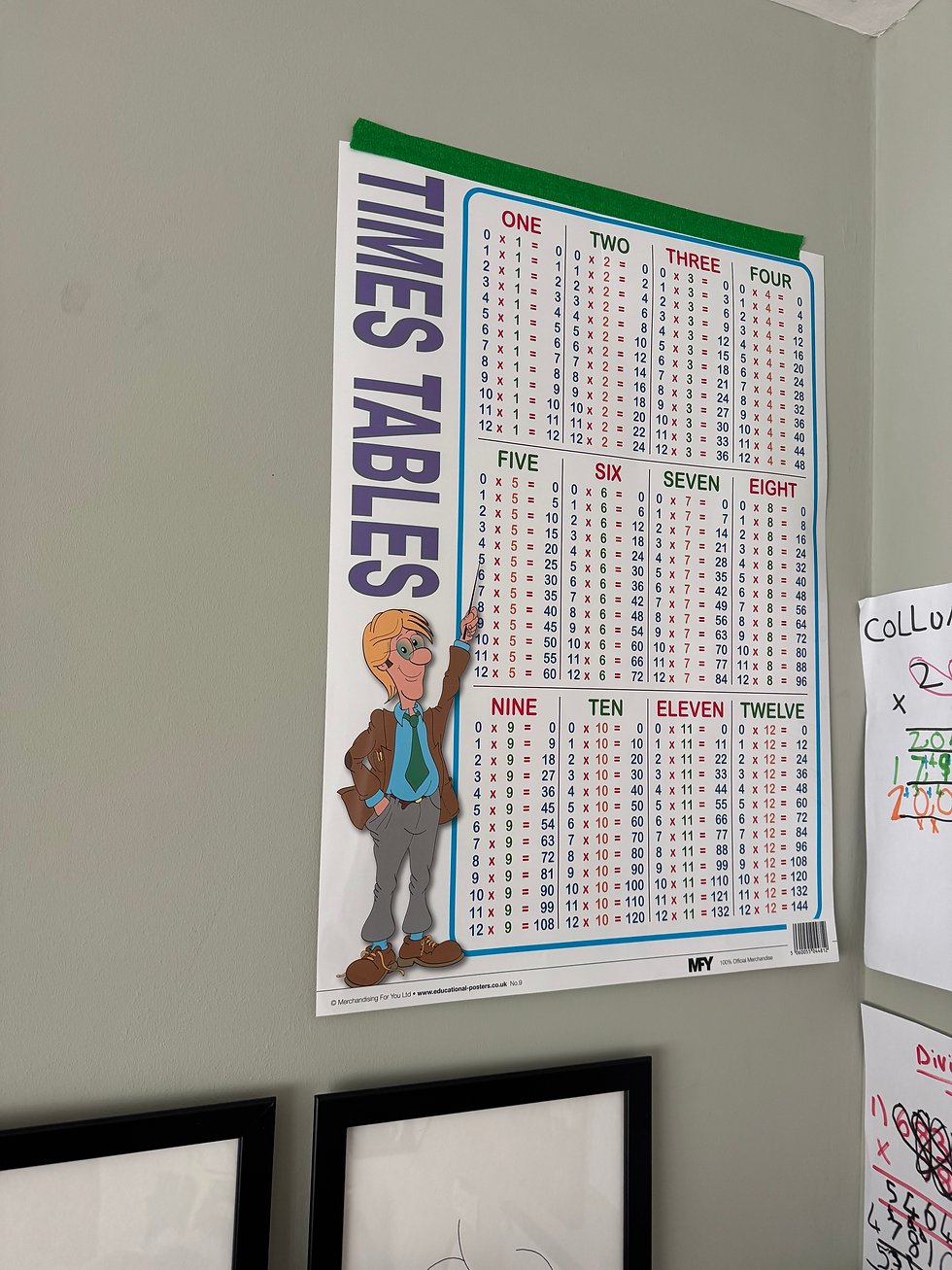
Learning times tables? Put answers on the floor and ask them to jump to the correct one.
Working on number bonds? Throw a ball backwards and forwards, saying the matching number each time.
Reading? It doesn’t always have to mean sitting silently at a table. Build a den, read outside, take turns reading funny voices or let your child read to a pet or favourite toy.
The skill you’re practising is exactly the same. You’ve just changed how you practise it.
Food first. Homework second!
This one sounds ridiculously simple, but it can make an enormous difference.
Before bringing out the school bag, make sure everyone has had something to eat and drink and feels ready. A hungry, tired child is unlikely to be particularly enthusiastic about remembering their six times table. And sometimes you can even bring the snack into the learning. Cereal pieces can become counters. Raisins can help with sharing and division. Crackers can become fractions.
We’re very happy to sneak learning in wherever we can!
Stop making play the reward for finishing the learning
“Finish your homework and then you can play.”
It’s something most of us have probably said at some point. But what if the play was the homework? Rather than separating the two, we love finding ways to combine them.
Roll dice. Race against each other. Create challenges. Hunt for answers. Build something. Move around. Draw. Talk. Play.
Your child can still practise exactly the skill their teacher has asked them to practise — without recreating the school day at your kitchen table.
Swap some of the worksheets for play
This is exactly why we created our 2 Weeks 2 Learn guides.
Each guide contains two weeks of simple games, activities and ideas to help children practise important skills without relying on endless worksheets and repetitive written tasks.
Instead of:
“Sit down and learn your spellings.”
Try a spelling game.
Instead of:
“You need to practise your times tables.”
Turn it into a challenge.
Instead of:
“Come on, you HAVE to do your reading.”
Try something designed to make reading feel more inviting.
The learning is still happening. It just feels much more like fun.
Keep it easy for you, too
Making homework playful shouldn’t mean giving parents more homework.
You shouldn’t need to spend half an hour preparing an activity you found online, buy loads of new resources or spend your evening cutting out dozens of tiny cards.
That’s why our activities are designed for real family life. They’re simple and manageable, and lots use things you probably already have at home. Choose an idea, have a play and sneak in some learning at the same time.
Need some help with September homework?
We have 2 Weeks 2 Learn guides to support some of the most common areas children are asked to practise at home, including Times Tables, Spellings, Number Bonds, Handwriting and Reading.
And if homework seems to be coming at you from every direction, we also have bundles.
Our Key Stage 1 Bundle brings together guides designed to support younger primary children, while our Key Stage 2 Bundle focuses on some of those increasingly important skills older primary children are expected to practise.
Or, if you want a bigger bank of ideas ready for whatever comes home in the school bag, take a look at our Ultimate Homework Bundle.
The bundles are also massively reduced compared with purchasing the guides individually, so they’re a great way to have lots of different ideas ready to use.

Homework doesn’t have to feel like homework
There will still be evenings when nobody wants to do it.
There will still be forgotten reading books and last-minute spelling practice.
And occasionally, there will still be a bit of nagging!
But changing how you approach homework can completely change how it feels.
Give them time after school.
Let them move.
Keep sessions short.
Follow their interests.
Turn practice into games.
And, whenever you can, let play and learning happen together.
Because when children are enjoying themselves, ten minutes of homework practice can suddenly feel very different.
Make it easy for you. Make it fun for them. Make homework feel a little less like homework.
Take a look at our 2 Weeks 2 Learn guides and bundles and upgrade those worksheets to joy!
Liz and Daisy xx


Comments