

Number Bonds Explained

Updated: May 8
As 40 something mum's, we grew up going to school in the 1990's and back then number bonds were not a thing. If you are of a similar vintage to us, when your children are asked to learn number bonds or you're asked to work on them at home, it's no wonder our generation are completely baffled. What are they? How can we teach our children number bonds if I don't even know what they are? Where can I find a crash course for dummies on number bonds? How can we make number bonds easier to understand? Well the answer to all of that is, HERE!
What are Number Bonds and examples of number bonds?
They are pairs of numbers that are added together to make the same target number. So for example, number bonds or pairs to 10 would be as follows:
0 and 10
1 and 9
2 and 8
3 and 7
4 and 6
5 and 5
All of these, no matter which way round you add them (e.g. 1+9 or 9+1) will =10. Your children learn them as these bonds or pairs. They learn numbers bonds to 5, to 10, to 20 and to 100. Sometimes they also cover number bonds using decimals to one, 0.1 + 0.9 = 1 for example. We set out all of the bonds they typically will learn and at which ages in our Number Bonds Guide.

Why do children learn number bonds?
Learning that these pairs always equal a certain number can help overall with their maths. These pairs are like the building blocks or foundations of maths and number understanding. As they get older and start to take on more complex maths questions like 3,456 + 7,654 - if they know their number bonds off by heart they will instantly see the matches in this seemingly complex maths question and be able to answer it quickly and with confidence. Can you spot the number bonds and work it out?
If your child is finding maths tricky and starting to lose confidence then going back to seeing if they have a secure understanding of number bonds if a great way to determine where they need support. You can use our FREE CHECKLIST to assess your child to see how confident they are with their number bonds and if you think they might need more support to unlock their understanding of number.
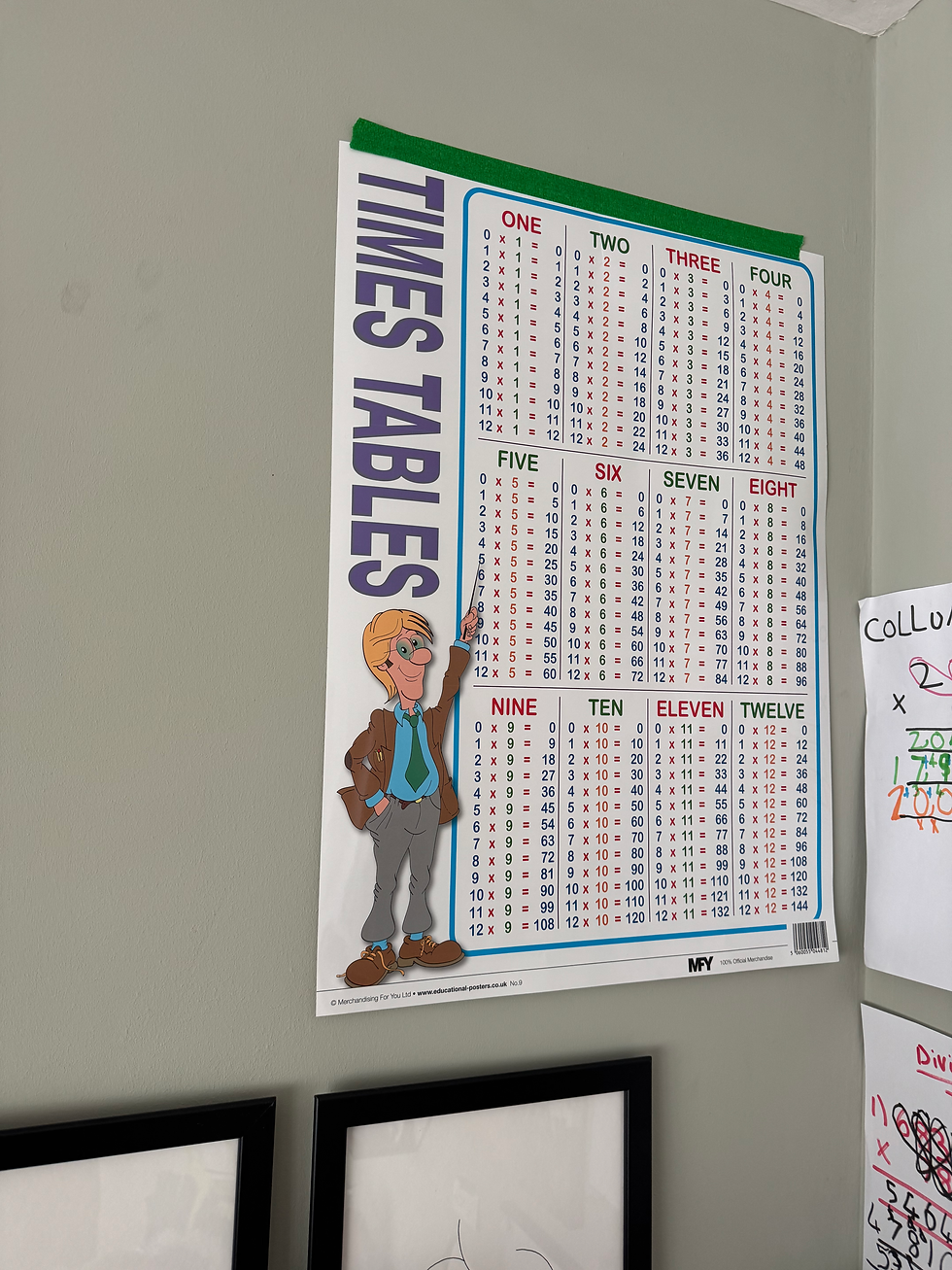
Times tables are also fundamental to this understanding of maths and being able to solve more complex questions at speed and with confidence. We also have a FREE checklist on Times Tables and a Guide to match, which we sell as part of our Maths Bundle if you are wanting a total guide to maths (at a bargain price!).
How do you explain number bonds to a child?
Through play! As always, here at 2Weeks2Learn our approach is always that it should be fun. Your child should want to take part in the activity first and the learning is secondary to the joy and connection you are creating through our games. You can see one of our number bonds games here, as an examples of the kind of fun we create in learning these pairs.
In our guides we break down how to learn them. Using different sensory learning techniques and different memory based techniques that help your child to remember it in a way that suits them. So for example, some games are with physical objects (always stuff you have at home!), some involve movement, some involve writing, and there are activities including problem solving, colouring, racing, all sorts of fun! Get the guide HERE.
What age do children learn number bonds?
They start to learning them in Key Stage 1 (in the National Curriculum in England) - so around age 5/6. But some fundamental spotting of patterns, which relate to number bonds, is also often taught through play in early years. By Key Stage 2 your child's understanding of number bonds becomes more crucial to their overall maths. It is helpful for their maths progression if they are secure in number bonds to 10 as they approach around age 7. If you feel like your child is struggling with maths, playing with number bonds is a great way to build that confidence back up again.
Really great material, helped our daughter so much. Lots of fun too and very easy to set up and get learning. Really great stuff
Review from Craig , May 2025.
What if my child is older and doesn't know their number bonds?
Don't worry, you can play the games in our guides at any primary school age. They are designed for ages 5-11. We believe all children should feel supported, no matter what their ages or level of development and play is a brilliant way to achieve this.

How can I support a child with SEND to learn number bonds?
We design our guides to suit all learners, no matter what their preferred style or speed of progress. So the answer is let us help! Often our guides are what parents turn to when typical methods to teach them number bonds haven't worked. Our games are SEND friendly. There is no pressure and they are built around what children enjoy doing, allowing space for regulation when needed (for example, the game above includes a crunchy snack great for sensory input). There are video demonstrations of each activity that you can share with your children, if they like to see them. There are different types of activities, so your children can try new ones or repeat the same ones over and over. It's really up to you. Our guides are there as a support for both your child and YOU as a parent.
What's the difference between number pairs and number bonds?
They are interchangable phrases for the same thing. Sometimes called pairs, sometimes called bonds. As with many things in education, nothing is agreed upon just to make it even more confusing for us all!!

The Times Tables Guide 
The Maths Bundle 
The Number Bonds Guide
We really hope that helps you see that number bonds aren't anything to worry about. They are super simple, but also fundamental which is why we are often asked to support our children with them at home. We also hope this blog explains how we can help if it is something you need ideas for. Download our FREE checklist and then our Number Bonds Guide today and get started on making maths something your child asks to do!

Comments